Wildlife
Home of the Spirit Bear.
Princess Royal Island is one of the last places on Earth where the Spirit Bear walks. The salmon that feed the forest, the wolves that fish the streams and the whales in the bay make an ecosystem where every species depends on every other.
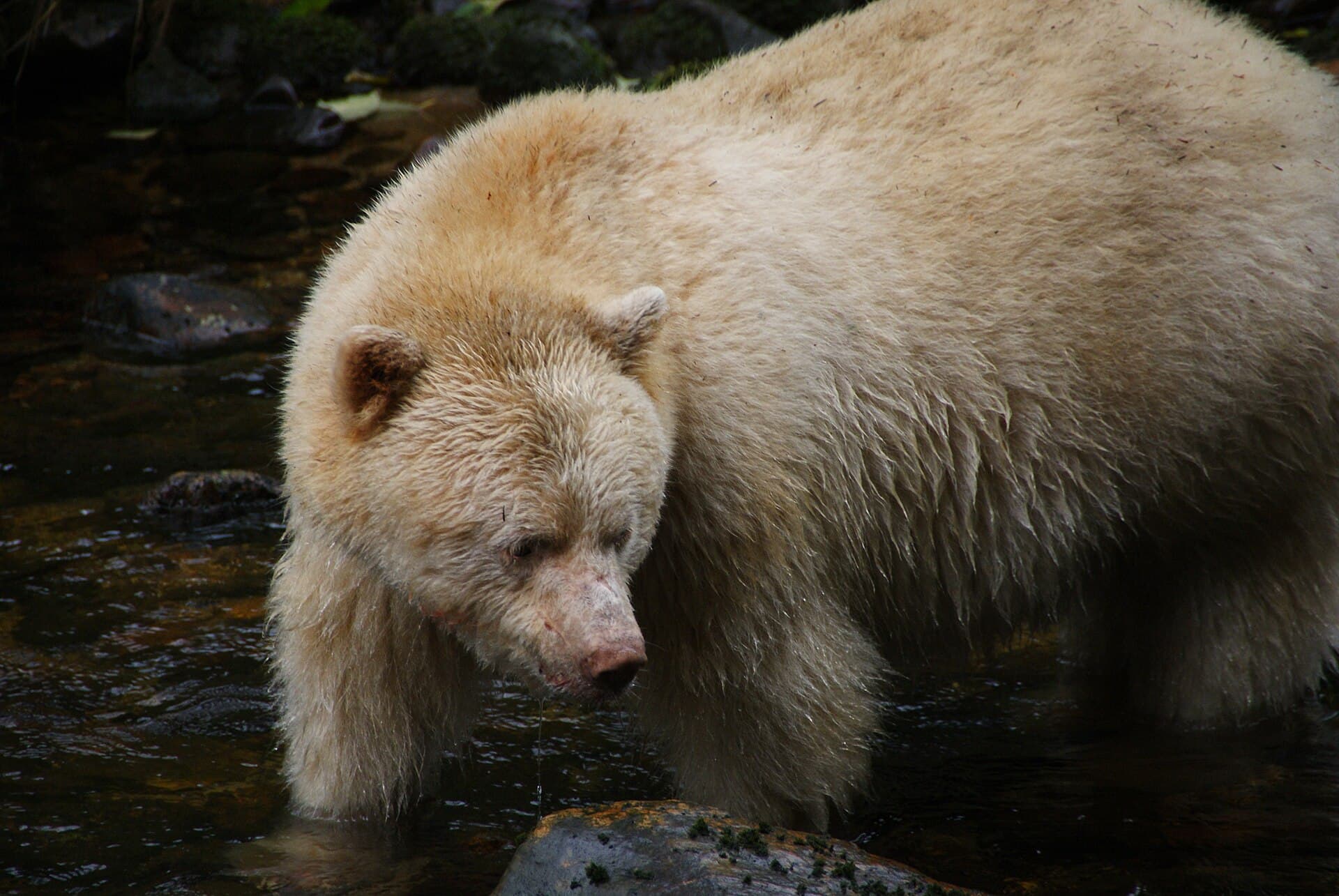
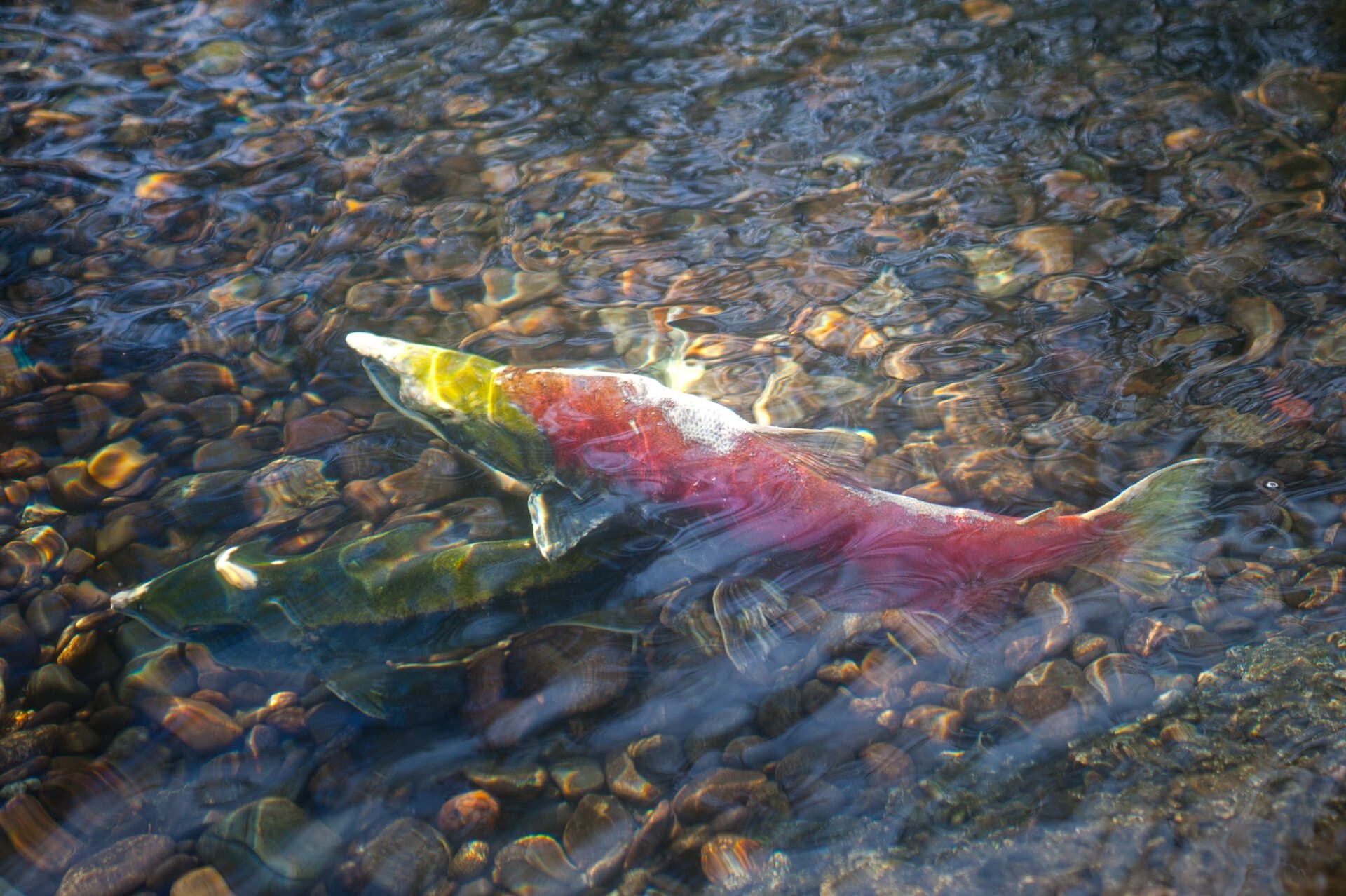
Long lens, respectful distance, natural behaviour.
Five residents
Tap one to read its field note.
Spirit Bear (Kermode bear)A white-coated black bear found nowhere else in this concentration.50–150 on Princess Royal Island +−
Ursus americanus kermodei
Provincial icon; genetically unique white-coated black bear
The bear that gives the village its name. The white coat is a recessive gene unique to this population: not albinism, not polar bear ancestry.
Pacific salmonThe engine of the coastal rainforest.Five species +−
Oncorhynchus spp.
Spawning runs in island streams; ecosystem keystone. Chinook, Sockeye, Coho, Pink, Chum.
Bears carry salmon into the forest, and nitrogen from decomposing fish feeds the old-growth trees. Salmon connect ocean, river, forest and bear in a single nutrient cycle.
Coastal wolfWolves that fish for salmon, as on no other coast.Small resident packs +−
Canis lupus columbianus
Resident; salmon-fishing behaviour documented
Genetically distinct from interior wolves, and documented fishing salmon from streams: a marine mammal in practice.
Humpback whaleDeep water in the bay is seasonal feeding habitat.Seasonal; increasing since the hunting ban +−
Megaptera novaeangliae
Seasonal, in the surrounding waters
Butedale Bay's deep water provides seasonal feeding habitat. Whale-watching is a proven eco-tourism driver on this coast.
Marbled murreletNests only in old-growth, so the forest's protection is its protection.Endangered; declining +−
Brachyramphus marmoratus
Endangered; old-growth dependent nesting. Habitat loss is the primary threat.
Nests only in old-growth coastal temperate rainforest, so 85% protection of the Great Bear Rainforest directly protects this species. A living indicator of forest health.
Three connected systems
Old-growth coastal temperate rainforest
6.4 million hectares (Great Bear Rainforest)
85% permanently protected since 2016
Western Red Cedar exceeding 1,500 years. Sitka Spruce reaching 90 metres.
Kelp forest and marine ecosystem
About 100,000 km², the Great Bear Sea
Marine planning agreements in place
Blue carbon potential: kelp forests sequester carbon comparable to terrestrial forests.
Salmon watershed corridor
Butedale Lake (1,600 acres), the falls, the bay
Water rights since the 1940s
Gravity-fed from a mountain reservoir; five salmon species use this corridor.