The place
Follow the water in.
Butedale is 122 acres of deeded, leased and tidal land: the only private holding on Princess Royal Island, with heritage buildings, a licensed hydro system and deep-water access. Touch a point to see what is there.
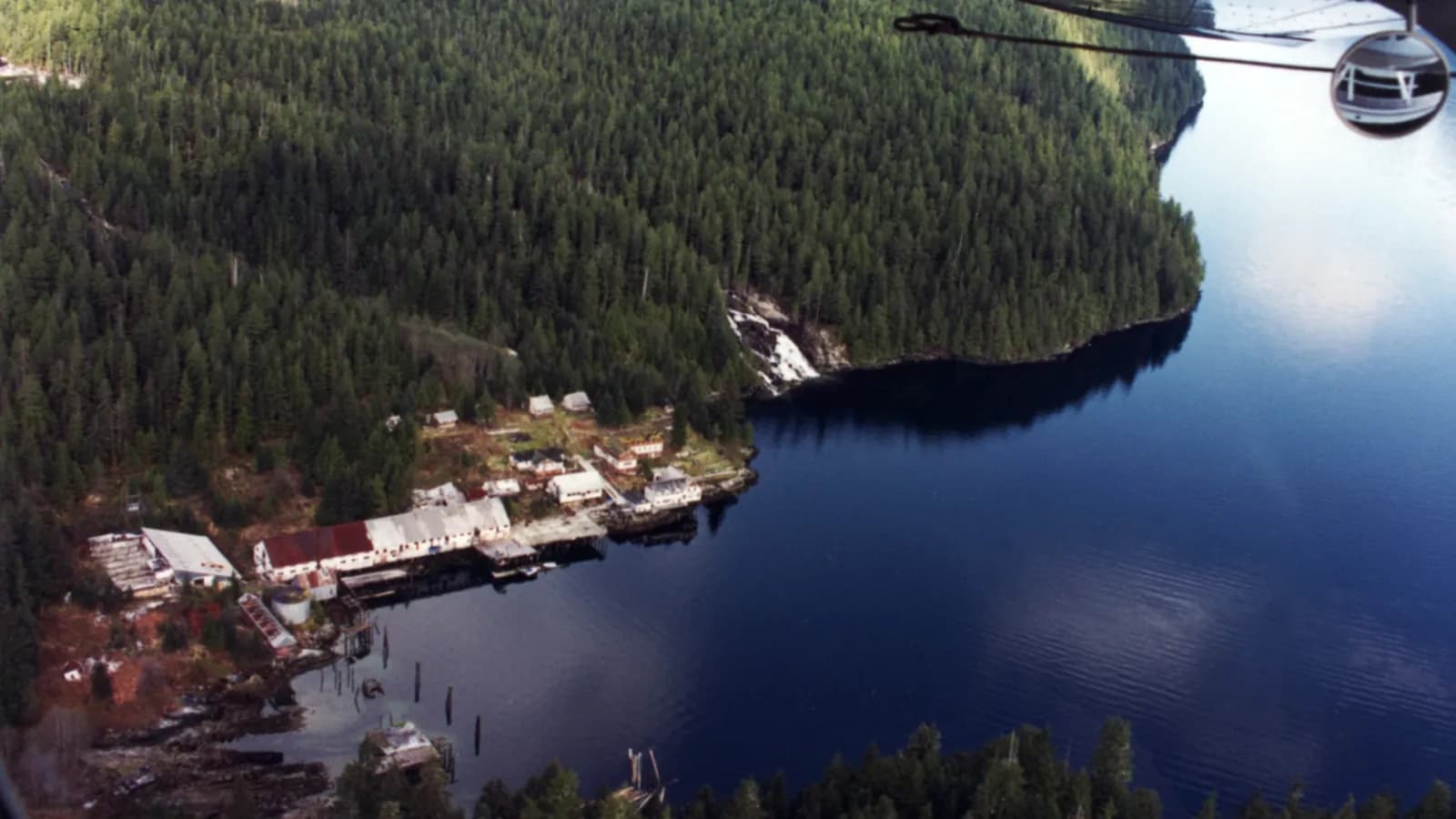
Butedale Falls
The Haisla village C'idexs stood here; later a cannery town of more than 400 people.
Orange line: the sea route from Prince Rupert. Dashed: territory (stylised). Green: Princess Royal Island. Boundaries are placeholders until supplied by the Nations.
By the numbers
122 acres of heritage, hydroelectric power,
and deep-water access
Total property
Deeded land, tidal bay and long-term leased parcels
Princess Royal Island
Fourth largest island in BC, the heartland of Spirit Bear country
Great Bear Rainforest
The largest intact coastal temperate rainforest; 85% of its old-growth protected
Butedale Lake
The mountain reservoir above the townsite that feeds the hydro system
Hydroelectric capacity
Licensed, with a concrete dam and penstock: clean baseload power
Stewards
Who holds this place
Haisla Nation
Traditional territory
Butedale sits at the southern boundary of Haisla territory, C'idexs. No historic treaty was signed; modern treaty talks continue, and free, prior and informed consent is a gate, not a courtesy.
Kitasoo/Xai'xais Nation
Island stewardship
Klemtu-based stewards of the wider region. They run Spirit Bear Lodge and created the Kitasoo Spirit Bear Conservancy.
Guardian Watchmen
Monitoring and access
Programs that monitor ecosystem health and manage visitor access across the territory.
Inside Passage Marine Corporation
Current holder
A sole-purpose company holding the Butedale Development Package, and the only private landholder on Princess Royal Island.
Blue carbon potential: the Great Bear Sea
The Great Bear Sea spans about 100,000 km² of marine ecosystems along BC's North Coast, one of the most ecologically intact temperate coastal systems on Earth. Kelp forests, eelgrass meadows and ocean sediments store carbon by three pathways: dissolved organic carbon with long residence times in the water, particulate organic carbon buried in shelf sediments, and deep-ocean transport below 200 m.
A 2025 npj Ocean Sustainability study estimates Canada's kelp forests hold blue carbon capacity comparable to freshwater mineral wetlands, 0.8 Tg C yr⁻¹. Coastal First Nations are developing a kelp carbon offset methodology, an estimated two to three years from market.
The Great Bear Forest Carbon Project, over 14 million acres, already shares carbon credit revenue among nine First Nation communities. It is the working precedent for RCCS integration at Butedale.
Sources: npj Ocean Sustainability (2025), Tier 2; Coastal First Nations, Great Bear Forest Carbon Project, Tier 2.