Story
A place already built, waiting for its next chapter.
Regeneration here does not mean building on pristine land. It means healing a place that was already built, already used, and is now waiting for what comes next.
Why it matters
The bears were here first.
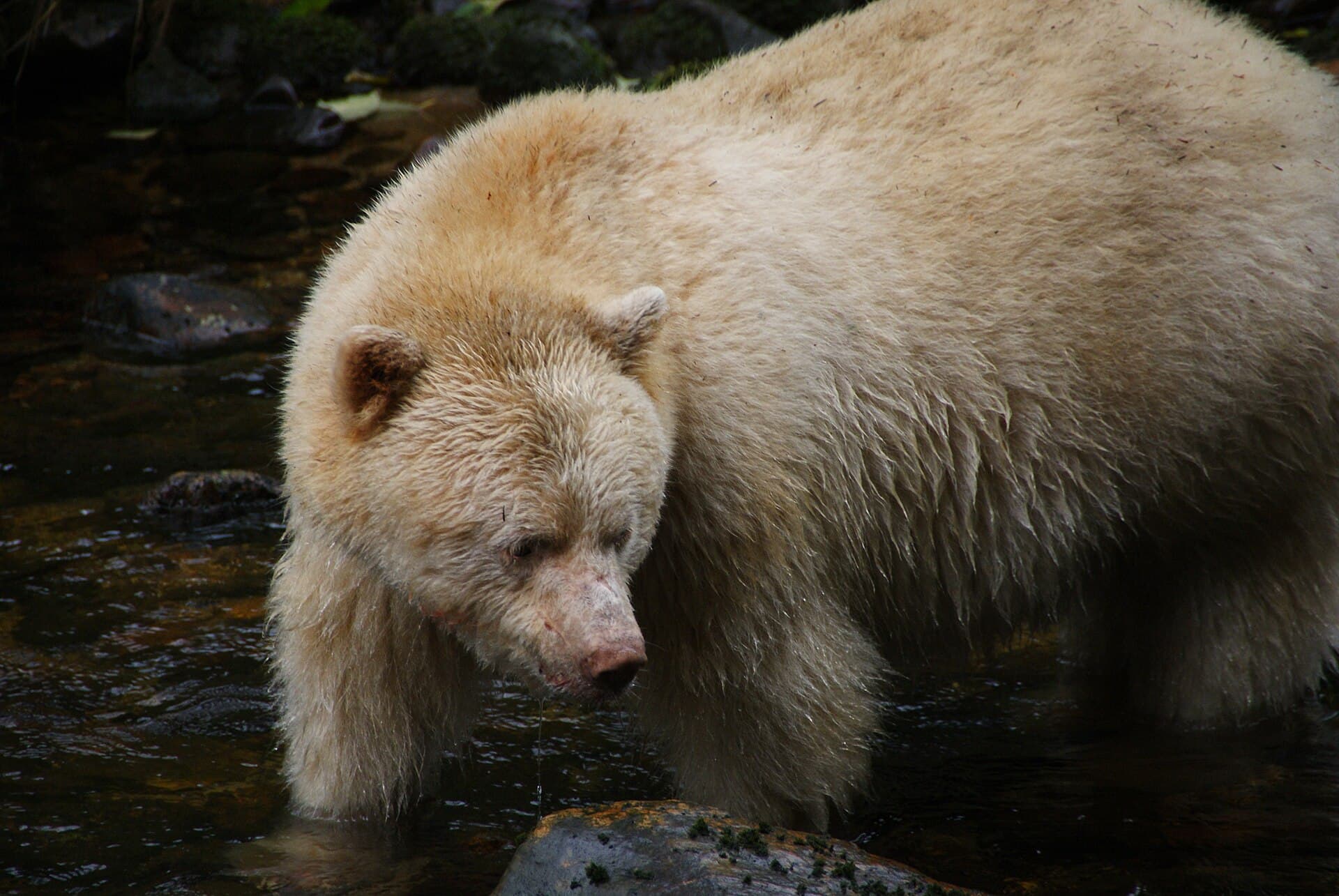
The Kermode bear carries one recessive gene that gives it a white coat. Found almost only on Princess Royal Island, the Spirit Bear is an apex indicator: when the bears thrive, so do the rainforest, the salmon streams and the sea.
Every development decision here asks one question: does this improve conditions for the Spirit Bear and the ecosystem it depends on?
Read more
The Spirit Bear is 30% more effective at catching salmon in daylight than its black-furred kin.
Butedale Bay is the only privately held land on Princess Royal Island. It carries a century of human habitation, heritage-listed structures, hydroelectric infrastructure and marine access.
Origin
C'idexs, the Haisla name for this place.
A midden at the foot of Butedale Falls marks a pre-contact Haisla village: Indigenous presence stretching back millennia. The cannery site is a Haisla stewardship area at the southern boundary of Haisla territory.
Read more
Historically, eight Kitimat Haisla and two Kemano Haisla families lived year-round at Butedale.
Princess Royal Island also sits within the region of the Kitasoo/Xai'xais Nation, whose territory spans about 13,000 km² of land and sea in the Great Bear Rainforest. In the 1860s two nations came together in Klemtu: the Kitasoo of the islands and the Xai'xais of the mainland.
The cannery era
A ruin that can heal.
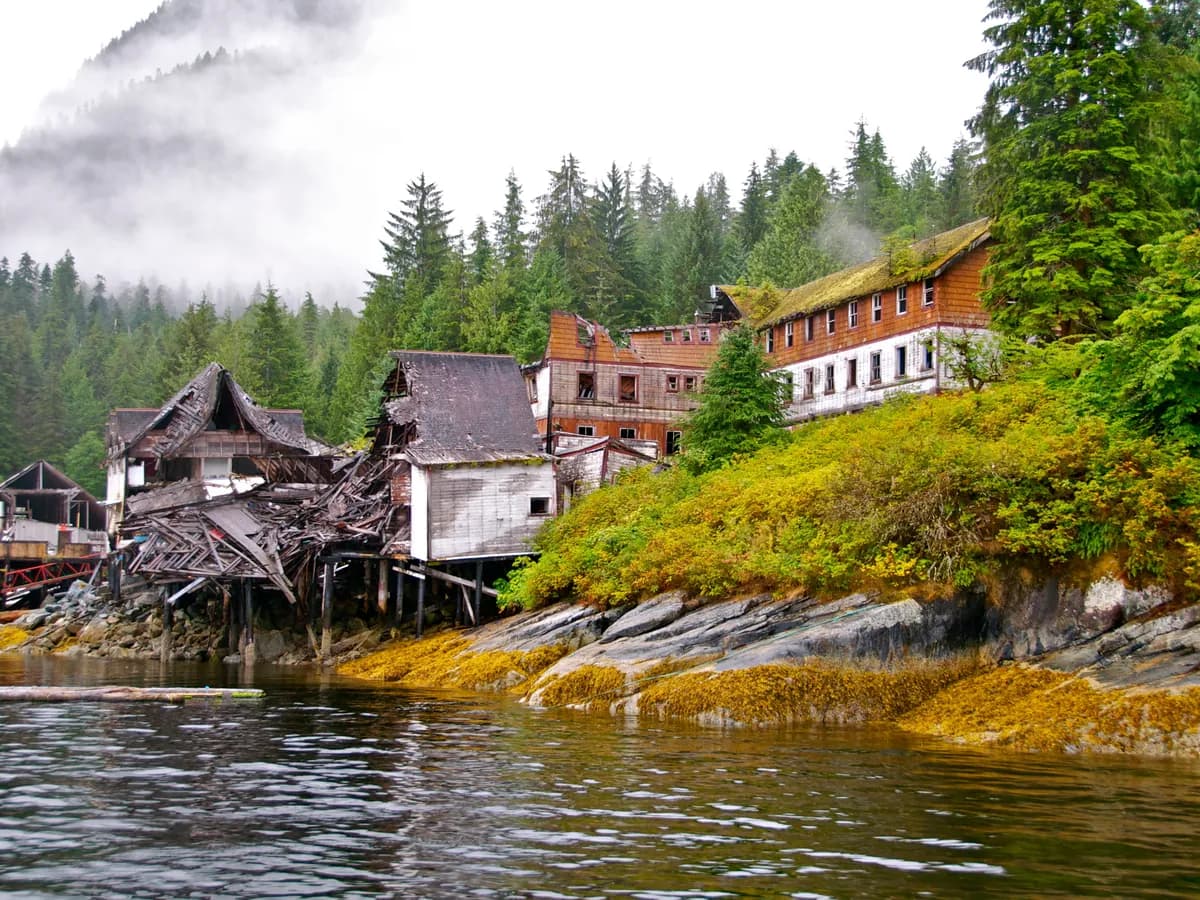
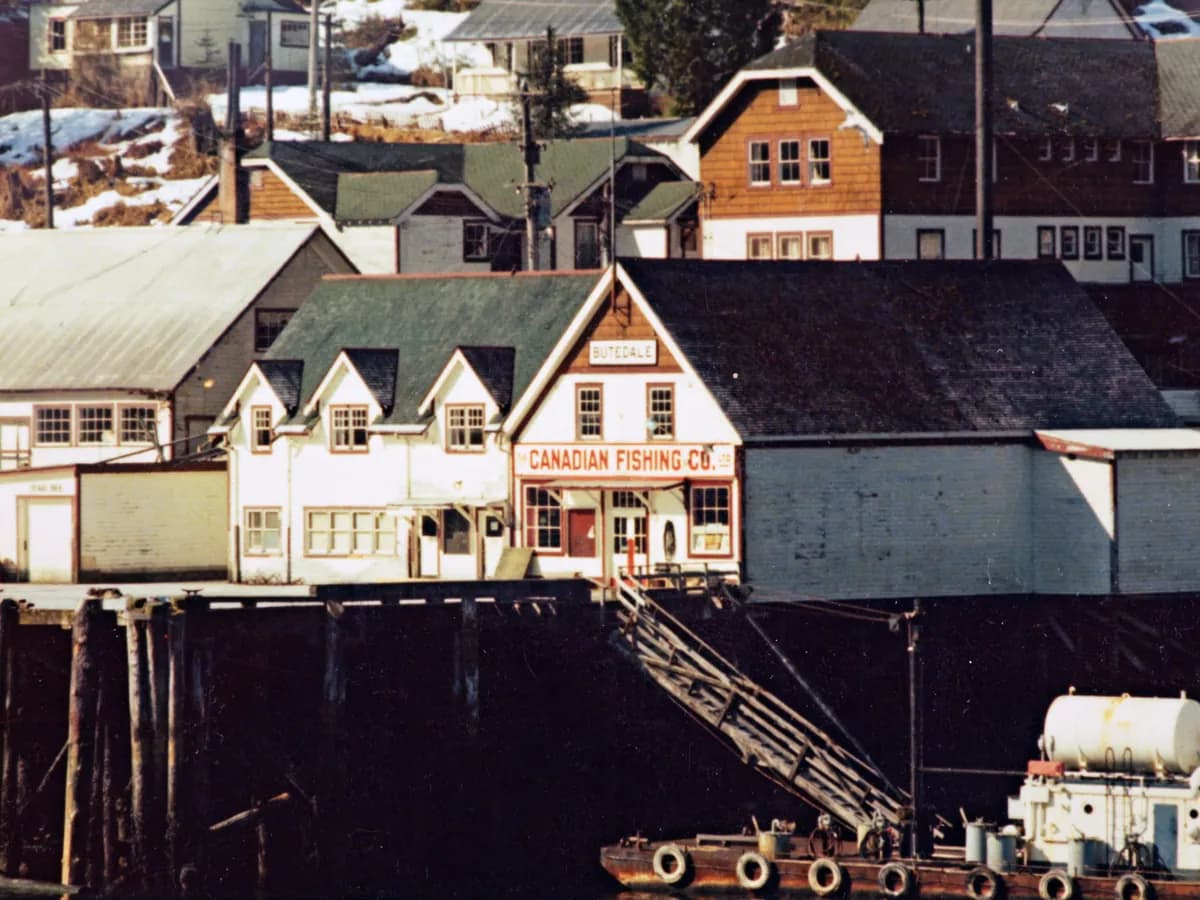
John Wallace founded the cannery village in 1911. At its peak in the 1920s and 30s, more than 400 people spent the summers here. The site joined Canada's Register of Historic Places in 2009.
The cannery, powerhouse and dam are still standing. The village returns as a working place, not a museum.
Read more
The Canadian Fishing Company operated the cannery until the 1950s; cold storage kept serving halibut fleets for another two decades.