Heritage
A cannery village, still standing.
The Butedale Cannery is on Canada's Register of Historic Places, a rare surviving complete coastal cannery village. What remains is not ruin; it is the foundation of what comes next.
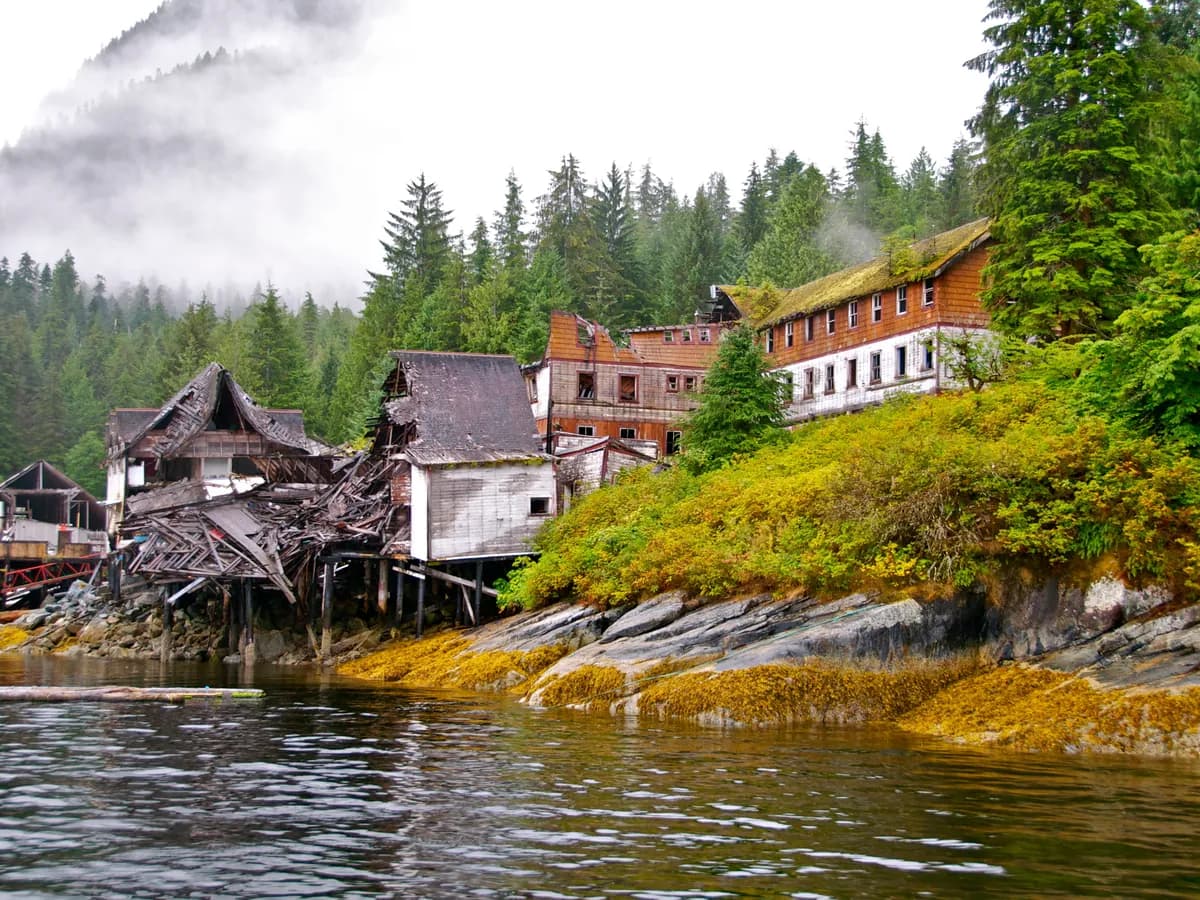
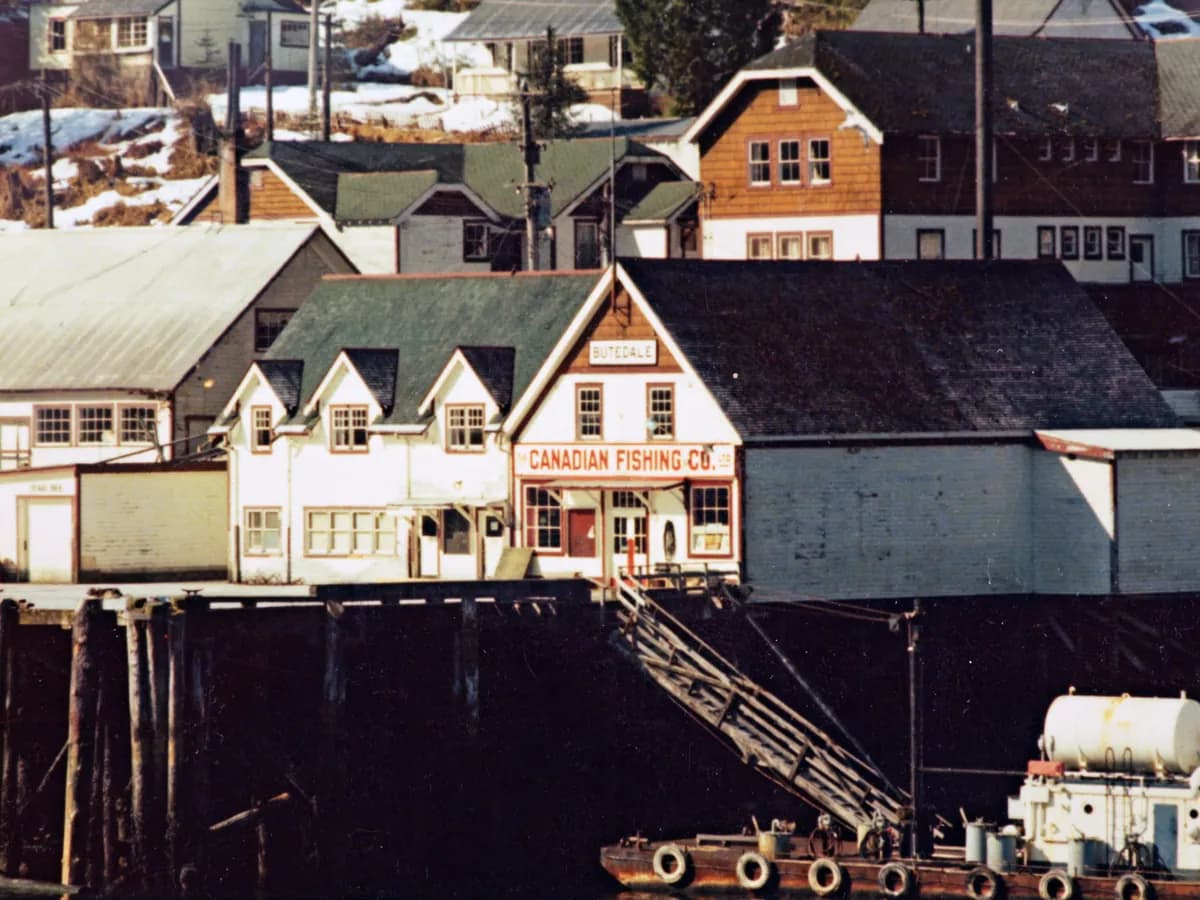
Photographed with their decay, not cleaned up.
The structures
Six buildings, six next lives.
Adaptive reuse keeps the heritage and builds the village: housing from the bunkhouse, dining from the cookhouse, research from cold storage, energy from the original powerhouse.
Bunkhouse
1911–1923
Standing; stabilization required
Next: Community housing
Cookhouse and mess hall
1917
Standing; structural assessment complete
Next: Restaurant and gathering space
Powerhouse
1911
Operational; 1 MW hydro intact
Next: Renewable energy, expandable to 200 MW
Cold storage building
1923
Standing; roof repair needed
Next: Research station and interpretive centre
Wharf and marine facilities
1911–1950s
Functional; Transport Canada permitted
Next: Marine gateway, deep-water vessel access
Dam and penstock
1911
Intact; gravity-fed from the 1,600-acre reservoir
Next: Hydroelectric power and spring water
The official record
Butedale is formally recognised as a rare surviving example of a complete coastal cannery village: the industrial complex, residential quarters, infrastructure and marine facilities that together tell the story of BC's salmon industry and the multi-ethnic communities that built it. In its peak decades, the 1920s through the 1950s, the summertime population exceeded 400, running the cannery, reduction plant, cold storage and ice works around the salmon season.
- Listed
- 2009
- Register entry
- #14603
- Recognition authority
- Regional District of Kitimat-Stikine
- Recognition level
- Regional
- Type
- Cultural landscape
- Source
- Tier 0, government record